B2B marketers no longer ask whether social media matters.
That question settled years ago.
What still feels unresolved is how to use social media properly, without turning it into a loud broadcast channel or a box-ticking exercise that drains time without moving the business forward.
Social platforms now sit at the intersection of marketing, sales, PR, employer branding, and customer service. Add AI into the mix, and the space feels both full of opportunity and slightly overwhelming.
This is where clarity helps.
Social media works best for B2B when teams stop treating it as a single channel and start seeing it as a system, one that supports different goals at different moments.
Organic Social Media for B2B Is About Visibility, Not Virality
Organic B2B social media rarely explodes overnight.
That is not a failure. It is the design.
Most buying decisions happen long after the first impression. Organic content earns its value by showing up consistently, shaping familiarity, and making a brand feel present before it feels persuasive.
Strong organic B2B content tends to focus on a few things done well:
- Clear points of view grounded in experience
- Useful explanations without unnecessary polish
- Repetition of ideas without repetition of language
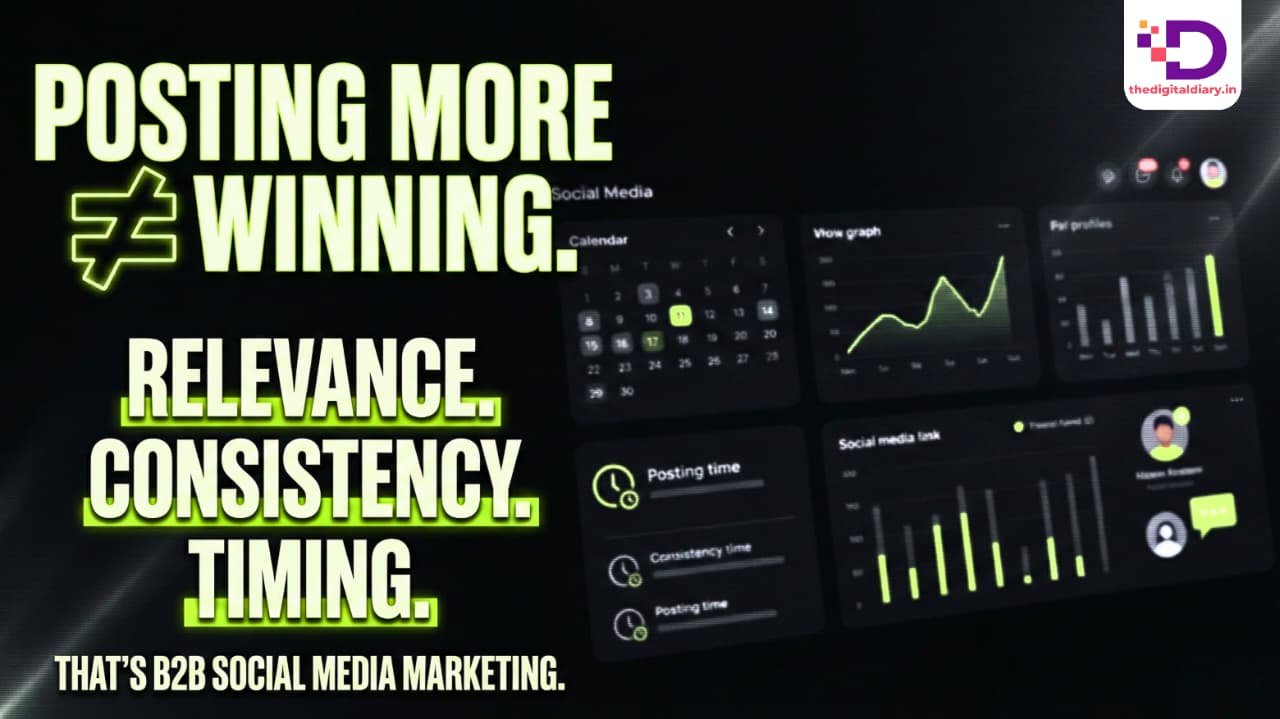
- Regular presence rather than perfect timing
This kind of content builds recognition. Over time, recognition turns into trust, and trust shortens sales conversations long before anyone fills out a form.
Paid Social Works When It Supports Strategy, Not When It Replaces It
Paid social media gives B2B marketers reach on demand.
It also exposes weak thinking very quickly.
The most effective paid campaigns usually amplify ideas that already perform organically. They extend reach rather than invent relevance. When paid social tries to compensate for unclear messaging, performance drops faster.
Smart B2B teams use paid social to do a few specific jobs well. They test positioning. They support account-based plays. They stay visible during long buying cycles.
They do not expect ads to carry the entire narrative on their own.
Social Media SEO and Content Work Together More Than Most Teams Realise
Social platforms increasingly behave like search engines.
People look for answers, not just entertainment.
This changes how B2B content should be written and structured. Posts that explain processes, break down complex ideas, or address common questions tend to surface more often and travel further.
Social media SEO does not require keyword stuffing. It rewards clarity, relevance, and language that mirrors how people actually search and speak.
When social content aligns with long-form content elsewhere, blogs, reports, landing pages, the ecosystem becomes easier to navigate for both people and algorithms.
Influencer Marketing in B2B Looks Quiet by Design
B2B influence rarely looks like sponsorship.
It looks like credibility.
Industry practitioners, consultants, founders, and technical specialists often carry more weight than brands themselves. Their influence comes from trust built over time, not follower counts alone.
Effective B2B influencer work feels collaborative rather than transactional. It shows up as co-created content, shared perspectives, and public conversations that feel useful to the audience, not staged for reach.
The best partnerships often develop slowly and last longer than a single campaign.
Account-Based Marketing Finds a Natural Home on Social
Social media offers ABM something email never quite could.
Real-time context.
Decision-makers reveal priorities, interests, and concerns in public. Social platforms allow marketers to observe before they speak, to tailor before they pitch.
ABM on social works when content feels relevant to the account, not personalised in an obvious way. It supports conversations already happening rather than forcing new ones into existence.
Subtlety matters here. Precision matters more.
Personal Branding and Social Selling Are No Longer Optional
Trust forms with people before it ever forms with brands.
In B2B, employee voices often outperform company accounts in reach and engagement. That does not mean turning teams into influencers. It means helping them show up with clarity and confidence.
Social selling works best when it avoids the hard sell entirely. Thoughtful commentary, experience-led insights, and consistent presence create familiarity that carries into sales discussions later.
Marketing and sales converge here, often to better effect.
Social PR and Customer Service Happen in Public Now
Reputation lives on timelines.
Journalists, analysts, customers, and prospects all watch how brands respond, not just what they publish. Social media acts as both megaphone and mirror.
For B2B brands, this means aligning PR, customer service, and marketing so responses feel considered, timely, and human. Silence speaks. Overreaction does too.
The brands that earn respect tend to respond calmly, explain clearly, and move on without theatrics.
Integration Is Where Social Media Delivers Real Scale
Social media rarely works best in isolation.
It amplifies launches, extends campaigns, reinforces messaging, and supports events. Its real power shows up when it connects with email, content marketing, sales enablement, and offline activity.
The most effective teams plan social alongside everything else, not after it.
AI and Automation Change Execution, Not Judgment
AI has made social media faster.
It has not made it wiser.
Automation helps with scheduling, monitoring, content drafts, and performance analysis. It removes friction from execution. What it does not replace is decision-making.
B2B marketers still need to decide what to say, when to say it, and when not to say anything at all. AI supports that work. It does not define it.
Used well, AI creates space for better thinking rather than louder output.
Social media marketing for B2B keeps evolving, shaped by platforms, behaviour, and technology. What stays consistent is the need for clarity, restraint, and intent. The tools change. The judgment still belongs to the people using them.
Frequently Asked Questions on B2B Social Media Marketing
Is social media marketing important in the B2B segment?
Yes, but not in the same way it works for B2C. In B2B, social media supports visibility, credibility, and long buying cycles rather than impulse decisions. It helps brands stay present while trust builds over time.
How can businesses build a successful social media strategy?
A strong strategy starts with clarity. Teams need to know who they are speaking to, what role social media plays in the wider business, and how success will be measured. Consistency and relevance matter more than posting everywhere.
How can social media support B2B lead generation and sales?
Social media rarely closes deals on its own. Instead, it warms accounts, reinforces expertise, and supports conversations that sales teams later carry forward. The value often shows up before the lead form does.
What are LinkedIn social media best practices for B2B brands?
LinkedIn works best when content feels informed and useful rather than promotional. Regular posting, employee participation, and thoughtful commentary tend to outperform polished brand messages shared infrequently.
What types of social media strategies work best for B2B companies?
There is no single winning formula. Most B2B teams combine organic thought leadership, selective paid promotion, account-focused engagement, and employee advocacy. The mix depends on audience, industry, and sales cycle length.