The Agentic Commerce Shift: Why Your Brand’s Next Customer is an AI Assistant
A Strategic Rebuild of the Commercial Internet
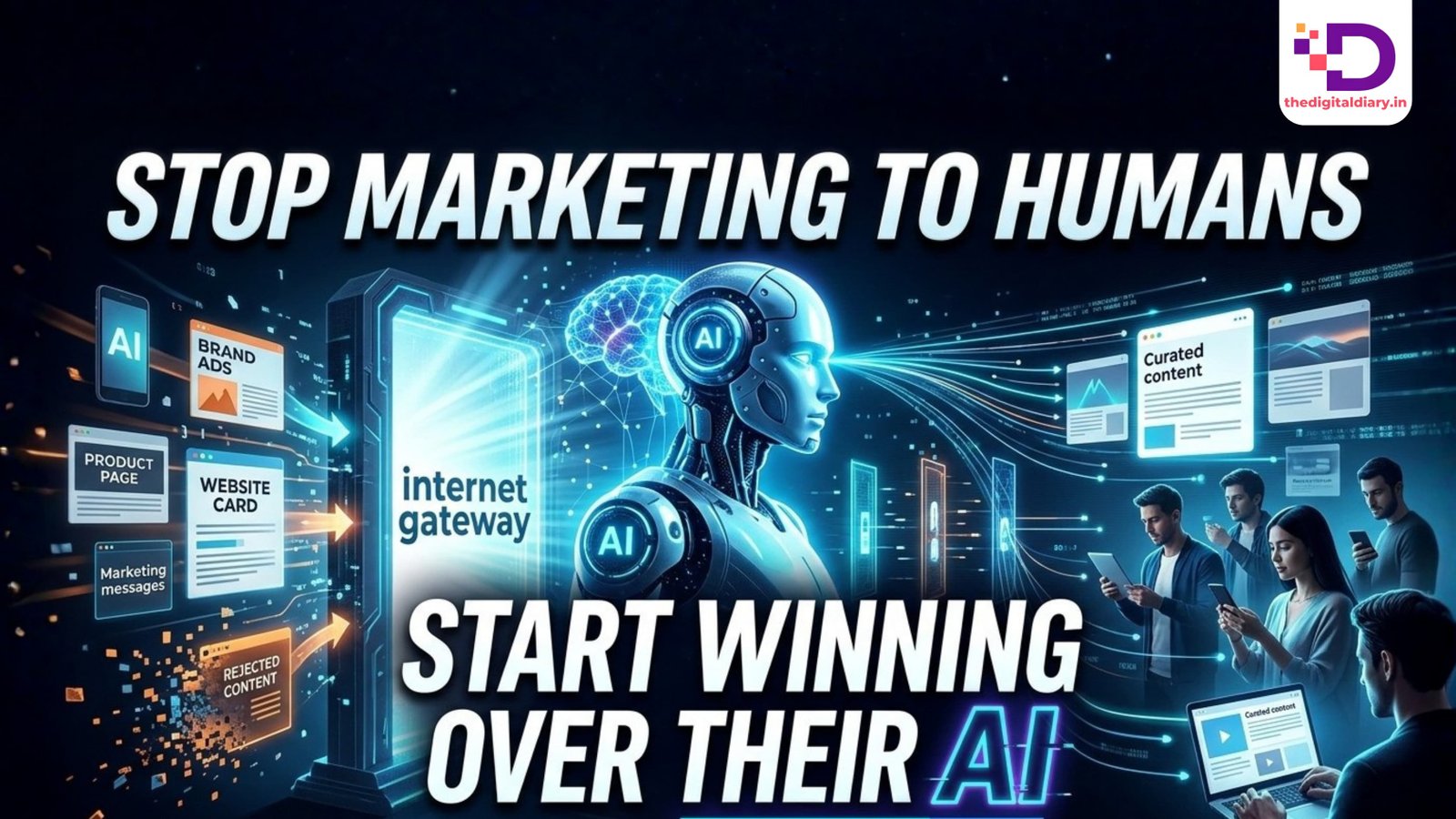
For two decades, marketing was a game of attention. We obsessed over "Where will the ads go?" and "How do we rank #1?" But while the industry argues over banner placements in ChatGPT, the very architecture of commerce is being hollowed out and rebuilt. We are moving away from the Discovery Era—where humans browsed tabs to compare options—and entering the Eligibility Era.
In this new landscape, AI isn't just a tool; it is the decision layer. It doesn't just show options; it selects them. If your brand isn't on the AI’s shortlist, you haven't just lost a click—you’ve been excluded from the transaction entirely.
From Discovery Interfaces to Decision Engines
The old digital funnel was linear: search, compare, decide. A buyer would open ten tabs for a "Best CRM" query and do the manual labor of evaluation. Today, that workflow is being compressed into a single prompt.
When a user asks an assistant, "Find the best automation tool for a 50-person agency," the AI synthesizes millions of data points to present three winners. This shortlist is the new SERP. Success in 2026 isn't about capturing human eyes anymore; it’s about earning inclusion from the machine. Optimization has shifted from persuasion to qualification.
The Five Pillars of the "Eligibility Stack"
To survive this shift, brands must optimize for "machine-legibility" without losing their human soul. According to the latest signals from platforms like LinkedIn and Google, the systems now lean on five critical credibility markers:
-
1. Structured Technical Clarity: Systems crave certainty. Vague marketing fluff is a liability. Your documentation, pricing, and site architecture must be API-accessible and follow protocols like the Universal Commerce Protocol (UCP) to ensure agents can parse your value without "hallucinating."
-
2. Third-Party Validation (The Reputation Moat): AI models are risk-averse. They prefer brands with independent validation—analyst reports, Reddit community mentions, and verified reviews—over self-published marketing claims.
-
3. Ecosystem Authority: Patterns matter. If your brand only exists on your own domain, you are a ghost to an AI. Presence across trusted industry publications and comparison hubs creates the "confidence signal" required for a recommendation.
-
4. Risk-Reduction Signals: Especially in B2B, AI recommends the "safest" bet. Transparent SLAs, security compliance (SOC2), and clear support footprints are now core SEO assets.
-
5. Decision-Grade Content: We must stop writing for "keywords" and start writing for "evaluations." Content that explains trade-offs, implementation guides, and "Best for X" scenarios provides the raw material AI needs to justify putting you on the shortlist.
The Verdict: Effectiveness Over Interruption
The arrival of "Agentic Commerce" means that ads can no longer save a bad product. Paid visibility cannot compensate for being a risky or poorly structured recommendation. In the Eligibility Era, marketing strategy, engineering, and PR are no longer separate departments—they are a unified front designed to make your brand the obvious choice for both humans and machines.
In a world of infinite, automated noise, the ultimate competitive advantage isn't being the loudest. It’s being the most selectable.