For a long time, data stayed in the background.
It powered targeting, shaped campaigns, and guided decisions, but rarely came with explanation. Marketers worked with it every day. Customers seldom questioned how it was collected or why it was used. That distance created a sense of stability.
That stability has faded.
Why First-Party Data Feels Different Now
Privacy discussions have moved into the open. Artificial intelligence has shifted the conversation as well. Even when the mechanics remain complex, AI has made data practices feel more visible.
People now think twice before sharing information. They want to understand what happens next, not just what they receive in return.
That shift has changed how first-party data is viewed.
What First-Party Data Looks Like in Practice
First-party data was always present. It simply was not the priority.
For years, third-party data offered speed and scale. It allowed marketers to reach large audiences without building direct relationships. Many strategies grew around that convenience.
Over time, the weaknesses became harder to ignore.
Browser restrictions, regulatory pressure, and changing user expectations reduced the reliability of external data. At the same time, AI increased the cost of poor inputs. Small data issues no longer stayed small. They spread.
In that environment, first-party data stopped feeling optional and started feeling necessary.
What First-Party Data Actually Represents
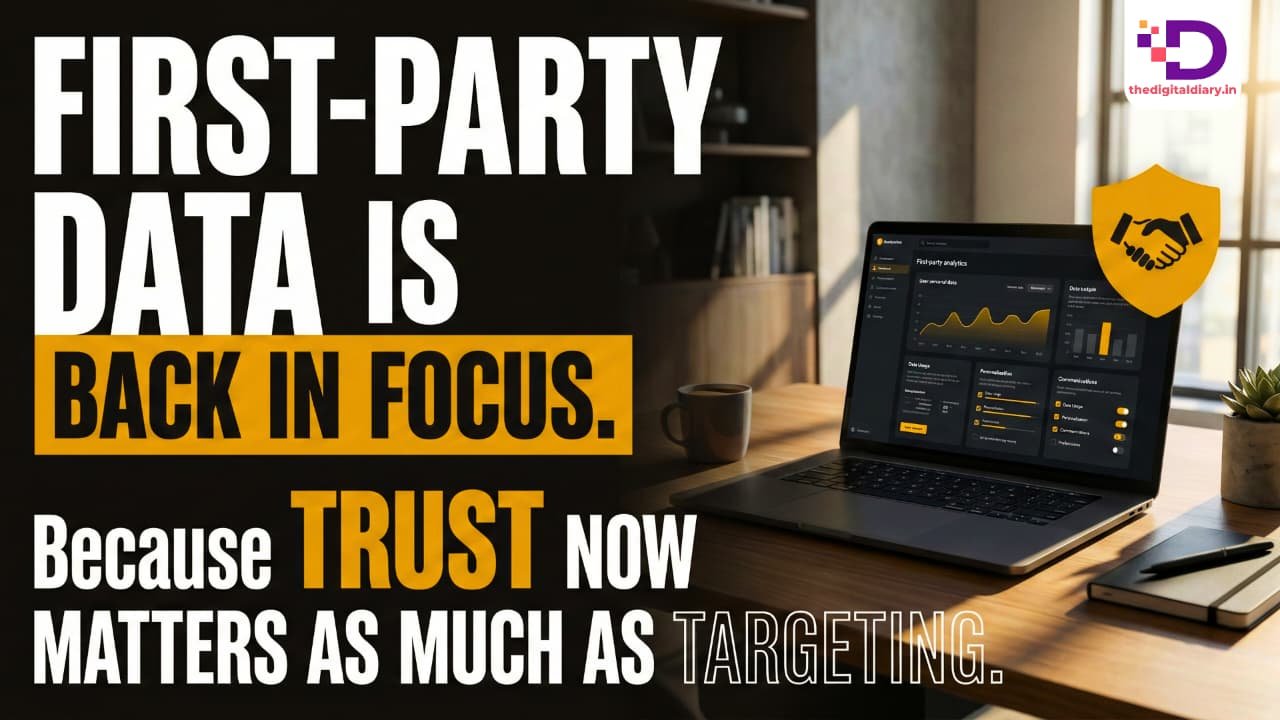
First-party data reflects real interaction.
It comes from moments when someone chooses to engage with a brand. Reading an article. Signing up for updates. Making a purchase. Contacting support. Leaving feedback.
Each action carries context. Not all of it is explicit, but it is grounded in real behaviour.
Over time, these interactions form patterns that inferred data cannot easily replicate. They show intent rather than assumption. That difference matters more now than it did in the past.
Why This Shift Creates Pressure Inside Teams
Collecting first-party data is rarely the hardest part.
Most organisations already gather it through websites, apps, email platforms, and customer support systems. The challenge lies in connecting and interpreting that data.
Information often sits in silos. Marketing, sales, and support teams may view the same customer through different systems, each holding only part of the picture. Aligning those views takes time and coordination.
This is less a technical problem than an organisational one. It requires shared understanding, not just shared tools.
How First-Party Data Shapes Better Decisions
When teams rely on first-party data, marketing tends to slow down in a productive way.
Personalisation becomes more precise rather than more aggressive. Messaging improves because it reflects actual behaviour, not assumed interest. Timing feels more considered.
The shift is subtle. It rarely announces itself.
Campaigns focus less on volume and more on relevance. Teams spend more time refining what they say and less time chasing reach for its own sake. Accuracy begins to matter more than scale.
The Role AI Plays Without Taking Over
AI does not replace first-party data. It depends on it.
Used well, AI helps teams analyse patterns across customer interactions. It highlights trends, identifies points of friction, and supports segmentation. It handles complexity that would otherwise take much longer to process.
What it does not do is set priorities.
People still make those decisions. First-party data provides the context that keeps AI output useful rather than misleading.
Why This Moment Matters
The industry is in a period of adjustment.
Third-party data still exists, but its reliability feels uncertain. Regulations continue to evolve. Customers expect greater transparency. AI systems reward clarity and consistency rather than shortcuts.
First-party data sits at the centre of these shifts.
It helps, but it does not solve everything. It does not remove the need to build trust. What it offers is a way of working that aligns more closely with how marketing is expected to function today.
Direct. Thoughtful. Accountable.
The Teams That Adapt More Easily
The organisations adapting most quickly tend to share a similar mindset.
They treat data as part of an exchange rather than something to extract. They explain why they collect information and design experiences that offer value in return. Over time, that consistency builds confidence.
Not quickly. Not dramatically. But steadily.
First-party data does not transform marketing overnight. It reshapes it gradually, as expectations continue to change and tools evolve around them.
At this point, that steady grounding feels less like a trend and more like a sensible place to stand.